
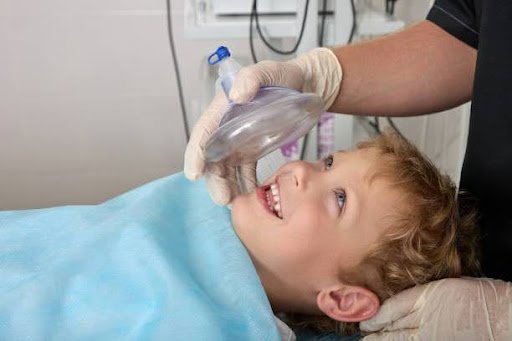
Dental general anaesthesia refers to a medical technique in which a child is put into a controlled state of unconsciousness to allow dental treatment to be carried out safely and comfortably. This option is typically considered when young patients are extremely anxious, unable to cooperate, have extensive dental needs, or have special healthcare requirements.
Benefits:
Removes pain and anxiety during procedures
Allows dentists to complete complex treatments in one visit
Useful for children with developmental or behavioural challenges
Risks and Precautions:
Administered by an experienced anaesthesiologist
Requires careful preoperative evaluation
Possible side effects include nausea, sore throat, or temporary grogginess
Common Applications:
Extensive tooth extractions
Full mouth rehabilitation
Treatment for dental trauma
Patients with dental phobia
Parents' Role:
Parents should provide a complete medical history and inform dentists about allergies or medications.
Follow pre-procedure rules (such as fasting) and post-procedure monitoring at home.